








Custom Cedar Patio Cover Designs: Styles, Costs, and Planning Tips for a Beautiful Backyard
Custom Cedar Patio Cover Designs That Transform Outdoor Living
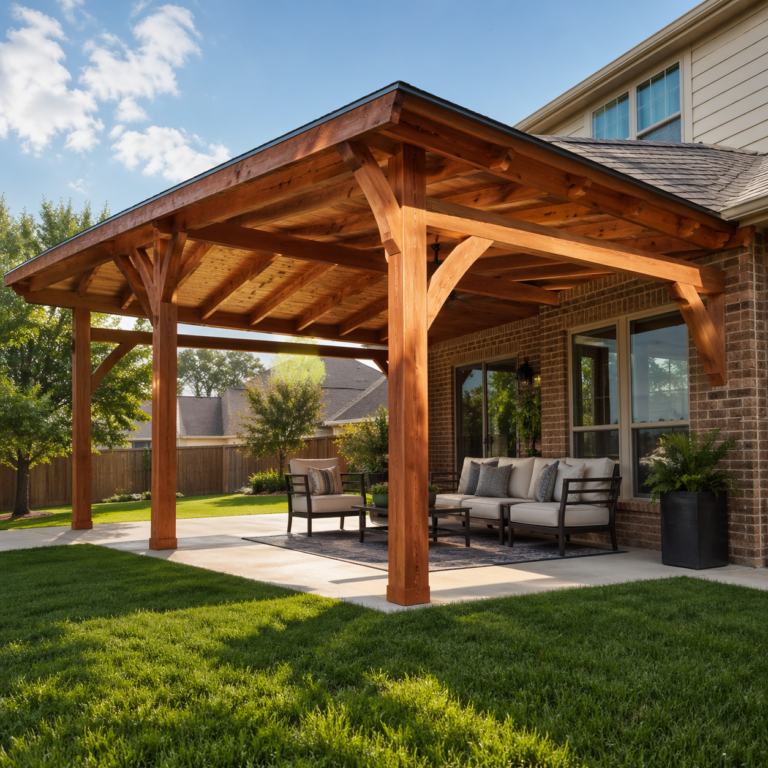
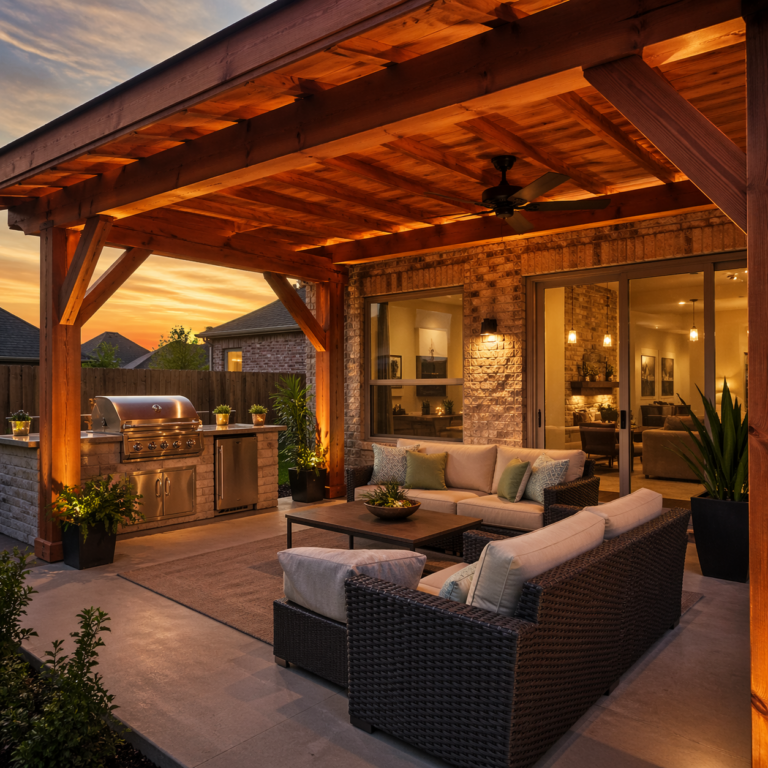
From classic pergolas to fully covered gable roofs, cedar offers timeless warmth, strength, and curb appeal—designed to fit your home and how you use your patio.
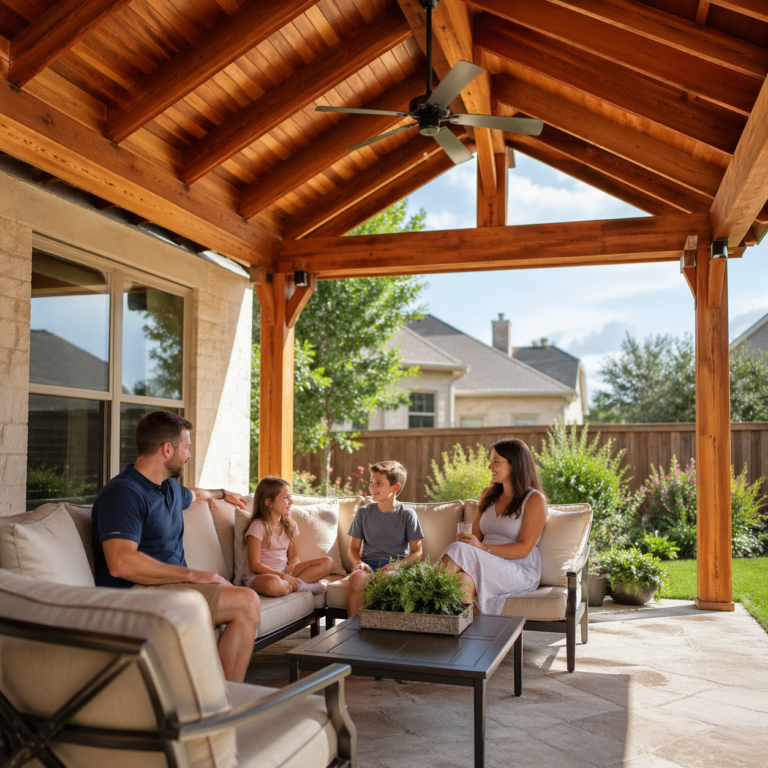
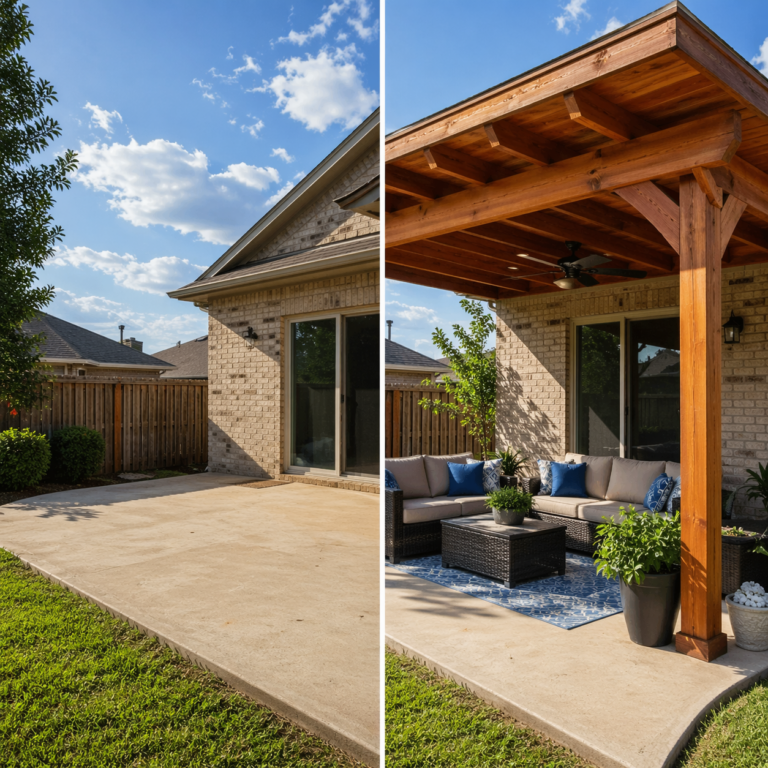
A patio cover is one of the few upgrades that changes how a home feels on an everyday basis. The right design turns a “hot slab” into a shaded outdoor room—comfortable for morning coffee, weeknight dinners, and relaxed weekends. When you choose custom cedar patio cover designs, you’re not just picking a roof; you’re shaping proportions, sightlines, airflow, lighting, and the way the structure connects to your home’s architecture.
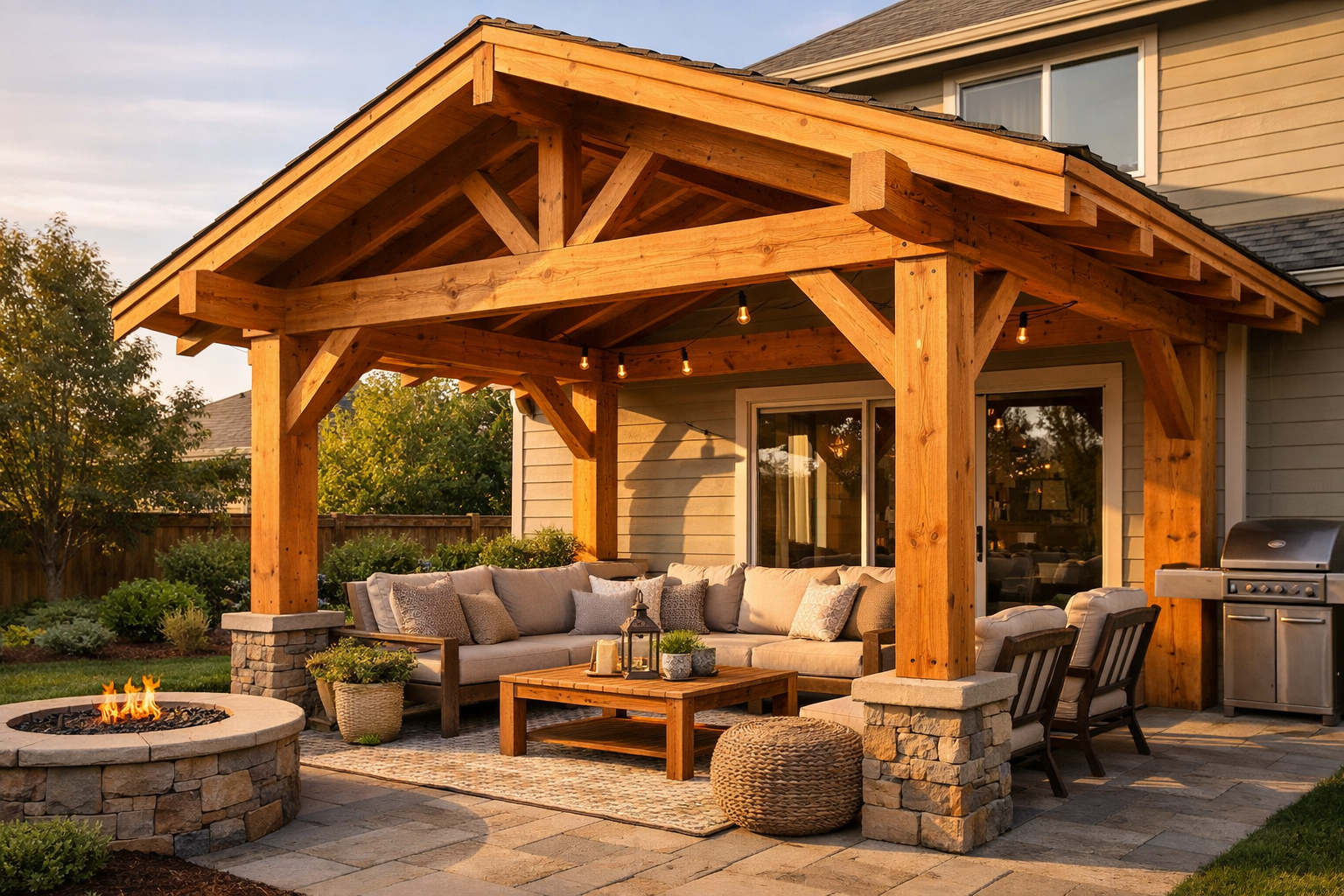
In North Texas, cedar is a favorite for good reason: it’s naturally resilient outdoors, it looks high-end without feeling flashy, and it’s flexible enough to support everything from clean modern lines to traditional decorative details. In this guide, you’ll learn how to compare popular styles, what truly drives price, and how to plan a cedar cover that looks like it was built with the home—not added later.
Key takeaway
A “great” patio cover is measured by comfort and function first (shade, rain protection, layout), then by aesthetics (proportions, materials, finishes). Custom design is how you get both—without overbuilding or overspending.
Why Cedar Is a Top Choice for Custom Patio Covers
Before you decide on a pergola, solid roof, gable, or hip design, it helps to understand what makes cedar different from other common patio cover materials. Cedar isn’t just a style choice—it changes how the structure performs over time, how it weathers, and what details you can reasonably build into it.
1) Naturally resistant to rot and insects
Cedar contains natural oils and compounds that help it resist decay and insects. That’s especially valuable in outdoor builds where heat, occasional storms, and seasonal humidity create the perfect environment for wood movement and wear. While no lumber is “maintenance-free,” cedar gives you a stronger starting point than many softer woods.
2) A warm, upscale look that works with many exterior styles
One reason homeowners love cedar is the visual depth: the grain pattern, color variation, and natural character. Cedar pairs beautifully with brick and stone, but it can also soften modern exteriors with black windows, light stucco, or clean horizontal siding. If you’re exploring regional considerations, see Cedar Patio Covers Corinth TX: What Homeowners Should Know for local context on design and performance.
3) Strong yet workable for true custom detailing
Cedar has a “sweet spot” of strength and workability, which makes it excellent for custom work: exposed beams, tailored post sizes, decorative rafter tails, and crisp joinery. In other words, you can create a structure that looks intentional—because it is.
4) Finish flexibility for long-term curb appeal
Cedar looks great unfinished at first, but exposure will gradually weather the surface. With the right sealer or stain, you can preserve a fresh cedar tone or choose a richer color that matches your home. Many homeowners appreciate that finishes can be refreshed over time—especially if exterior paint colors or landscape design evolve.
Design tip: If you love cedar’s natural warmth, ask about semi-transparent stains. They tend to keep the wood’s character visible while offering more UV protection than a clear sealer alone.
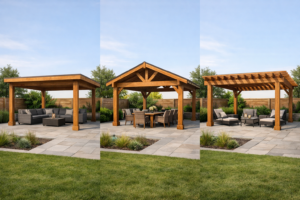
Popular Custom Cedar Patio Cover Styles (And When Each Works Best)
Cedar can be built into nearly any patio cover shape, but the “best” style depends on how you use the space and what you expect from it: filtered shade versus full protection, airy openness versus a defined outdoor room, and low-profile lines versus dramatic architecture.
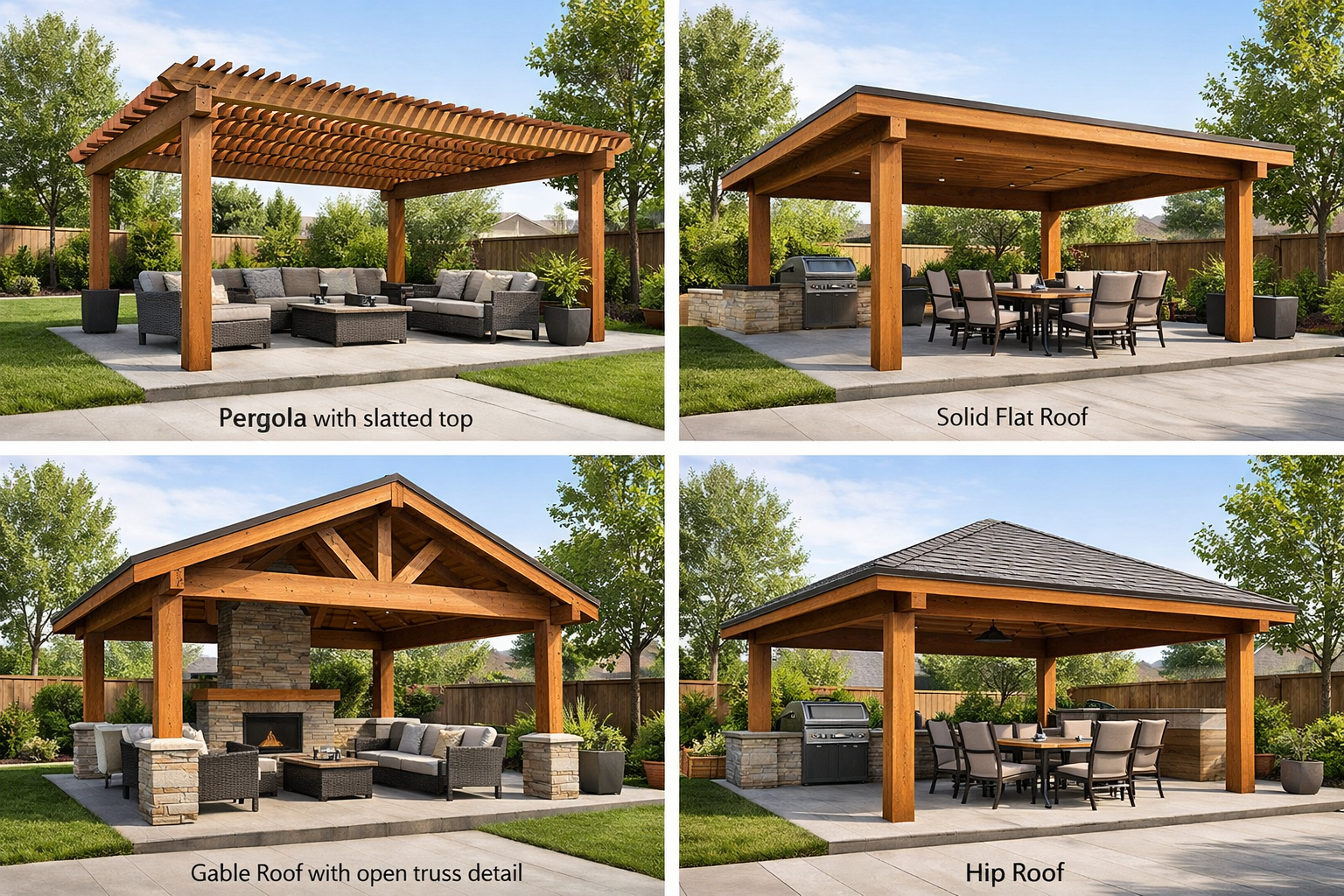
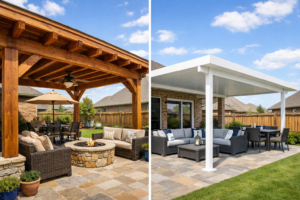
Pergola-style cedar covers (partial shade, open-air feel)
Pergolas use slats or rafters to create patterned shade rather than full coverage. They’re ideal when you want airflow and sky visibility, but you still want relief from harsh sun. Pergolas also work well for homeowners who plan to add:
- Shade canopies or retractable fabric panels
- Climbing vines (with realistic expectations and maintenance)
- String lights or a simple ceiling fan zone (depending on framing)
In many backyards, a pergola is the most “architectural” way to define a seating space without making it feel enclosed.
Solid roof covers (maximum sun and rain protection)
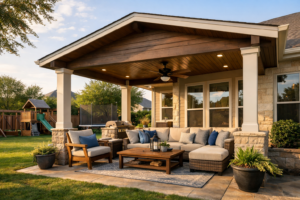
A solid roof is the choice for true all-season functionality: outdoor dining, grills, TVs, and seating that can stay outside more comfortably. This style typically includes roof decking, underlayment, and a finished roofing surface (often designed to coordinate with the home). If your goal is to expand living space—almost like adding an outdoor family room—solid coverage is hard to beat.
Homeowners often notice a big comfort difference: under a solid roof, the patio surface can be significantly cooler compared to full sun, and summer gatherings become far more predictable.
Gable roof designs (height, airflow, standout curb appeal)
Gable roofs create a peaked profile that adds volume overhead. Practically, that height improves perceived openness and can help heat rise away from the sitting area—especially when paired with ceiling fans. Visually, gables can mirror home rooflines, making the cover look like an intentional extension of the architecture rather than an add-on.
Gable covers are excellent when you want a statement look, when your patio is wide, or when a low roof would feel cramped near doors and windows.
Hip roof designs (balanced, finished look from every angle)
Hip roofs slope on all sides, creating a symmetrical, polished appearance. They can look especially “complete” on larger patios or corner lots where the structure is visible from multiple angles. This style can also help when you want a roof form that feels cohesive without drawing too much attention.
Freestanding cedar covers (define a separate outdoor zone)
Not every yard layout favors an attached cover. A freestanding structure can create a destination space—poolside lounge, fire pit area, or a quiet seating zone away from the back door. It’s also a practical solution when attachment points are limited or when you want to preserve exterior features.
Quick selection guide
- Want sky + filtered shade? Pergola.
- Want reliable rain coverage? Solid roof.
- Want height and a dramatic profile? Gable roof.
- Want symmetry and “finished” curb appeal? Hip roof.
- Want a separate destination space? Freestanding cover.
Design Details That Make Your Patio Cover Feel Truly Custom
Two patio covers can be the same size and general style—and still feel completely different. The difference is in the decisions you make about scale, structure, finish, and “invisible” planning like wiring and drainage. These are the details that turn cedar patio cover design ideas into a finished outdoor space you’ll actually use.
Right-size the cover to your furniture layout (not just the slab)
A common mistake is designing to the patio slab dimensions alone. Instead, design around how you’ll place furniture and how people will move through the space. A few practical layout rules:
- Circulation paths: Aim for comfortable walkways around seating and dining areas so the space doesn’t feel tight during gatherings.
- Dining comfort: Leave enough room to pull chairs out and walk behind them—especially near doors.
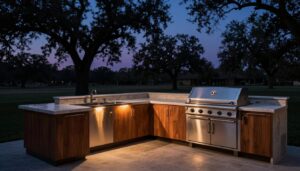
- Cooking zone: If you grill under cover, consider smoke management, clearance, and whether you want a dedicated prep counter.
If an outdoor kitchen is part of your plan, it helps to coordinate dimensions early. This guide on outdoor kitchens in Denton TX offers a useful overview of layout elements you can account for during the patio cover design phase.
Plan post placement and beam spacing around doors, windows, and views
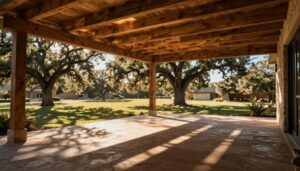
Posts and beams aren’t just structural—they’re visual “frames.” Smart placement keeps your best sightlines open, avoids blocking doors, and makes the cover feel integrated with the home. A well-designed custom build often aligns beams with architectural features (like window groupings or roof edges) so everything feels intentional.
Choose finishes that support your home’s palette
Finishes do more than protect wood; they tie the structure into the home. Consider how your cedar will relate to:
- Roof shingles and gutters
- Trim color and fascia lines
- Stone, brick, or siding tones
- Hardscape colors (concrete, pavers, outdoor tile)
Many homeowners like the look of cedar with black hardware and dark fan housings for a modern contrast. Others prefer warm bronze or classic white accents. There’s no one right answer—only what makes your outdoor space feel cohesive.
Build in comfort features early (lighting, fans, TV zones)
The most “custom” patio covers are the ones that feel effortless to use at night and in peak summer heat. That often means designing for comfort features from the start:
- Ceiling fans: Add blocking and plan fan placement so airflow hits seating and dining areas.
- Lighting layers: Combine general lighting with task lighting (like over a grill or serving area).
- TV mounting: If you want a TV, plan a protected mounting location, power, and cable routing so you don’t see cords later.
When these are afterthoughts, you end up with surface-mounted conduit, awkward fixture placement, or lighting that doesn’t match how you actually use the space.
Design drainage and gutters to protect the home (and keep walkways usable)
Drainage is one of the most overlooked pieces of patio cover design. A beautiful cover that dumps water near a door threshold—or next to the foundation—creates problems fast. A good plan addresses where water goes, how it gets there, and how to keep the result looking clean.
Practical note: If you’re choosing a solid roof, talk through gutter placement and downspout routing before construction starts. It’s much easier to integrate drainage cleanly than to retrofit it later.
Cost Factors: What Impacts the Price of a Custom Cedar Patio Cover
Homeowners often ask: how much does a cedar patio cover cost? The most accurate answer is that cost depends on the design decisions that determine materials, labor, and complexity. Rather than guessing a number, it’s more useful to understand the levers that move a budget up or down—so you can prioritize what matters most.
1) Size and structural complexity
Square footage matters, but complexity matters too. A larger structure uses more lumber, hardware, and roofing materials, and it takes longer to build. Complexity can include roof pitch changes, tall gable peaks, multiple bays, or special structural requirements.
2) Pergola vs. solid roof (weatherproofing layers add cost)
Open-top pergolas are typically less expensive than solid roofs because they require fewer layers and less weatherproofing. Solid roofs often include decking, underlayment, flashing details, and a finished roofing surface. Those additional components (and the labor to install them correctly) are a major driver in the overall project total.
3) Site conditions: slab, slope, access, and attachment points
Two homes can get the same cover, but the install may differ. Costs can change based on:
- Existing slab condition: Cracks, slope issues, or uncertain thickness may affect footing decisions.
- Yard access: Tight side yards or landscaping can slow material delivery and build steps.
- Attachment complexity: Tying into the home properly may require careful flashing and structural anchoring.
4) Upgrades that improve comfort and “finished” look
Optional features are where homeowners can tailor both the experience and the price. Typical upgrades include:
- Electrical rough-in, recessed lighting, pendant lights
- Ceiling fans (including bracing and switches)
- Staining or sealing (and premium stain systems)
- Decorative trim, corbels, or upgraded post wraps
- Premium hardware and fasteners
- Gutters and downspouts integrated cleanly
Many of these upgrades have an outsized impact on daily enjoyment. If you’re weighing how much to invest, this article on what patio covers are worth (cost vs value, ROI, and benefits) is a helpful companion read.
5) Permits, inspections, and code-compliant design
Depending on your area and the structure type, permitting and inspections may be required. Even when permits aren’t strictly required, code-compliant structural design is still the smart approach—especially for attached covers and roof loads. A professional estimate should clearly include any permitting considerations, so you’re not surprised mid-project.
Budgeting mindset that works
Start by choosing the roof style that matches how you’ll use the patio (pergola vs solid). Then allocate budget to the “experience drivers” you’ll feel every day—like shade coverage, fan placement, and lighting—before spending heavily on purely decorative add-ons.
Planning Checklist: How to Choose the Right Design for Your Home
Great patio covers are planned like a room addition: you define how it should function, account for sun and water, align it with the home’s architecture, then refine details. Use the checklist below to avoid the most common design regrets.
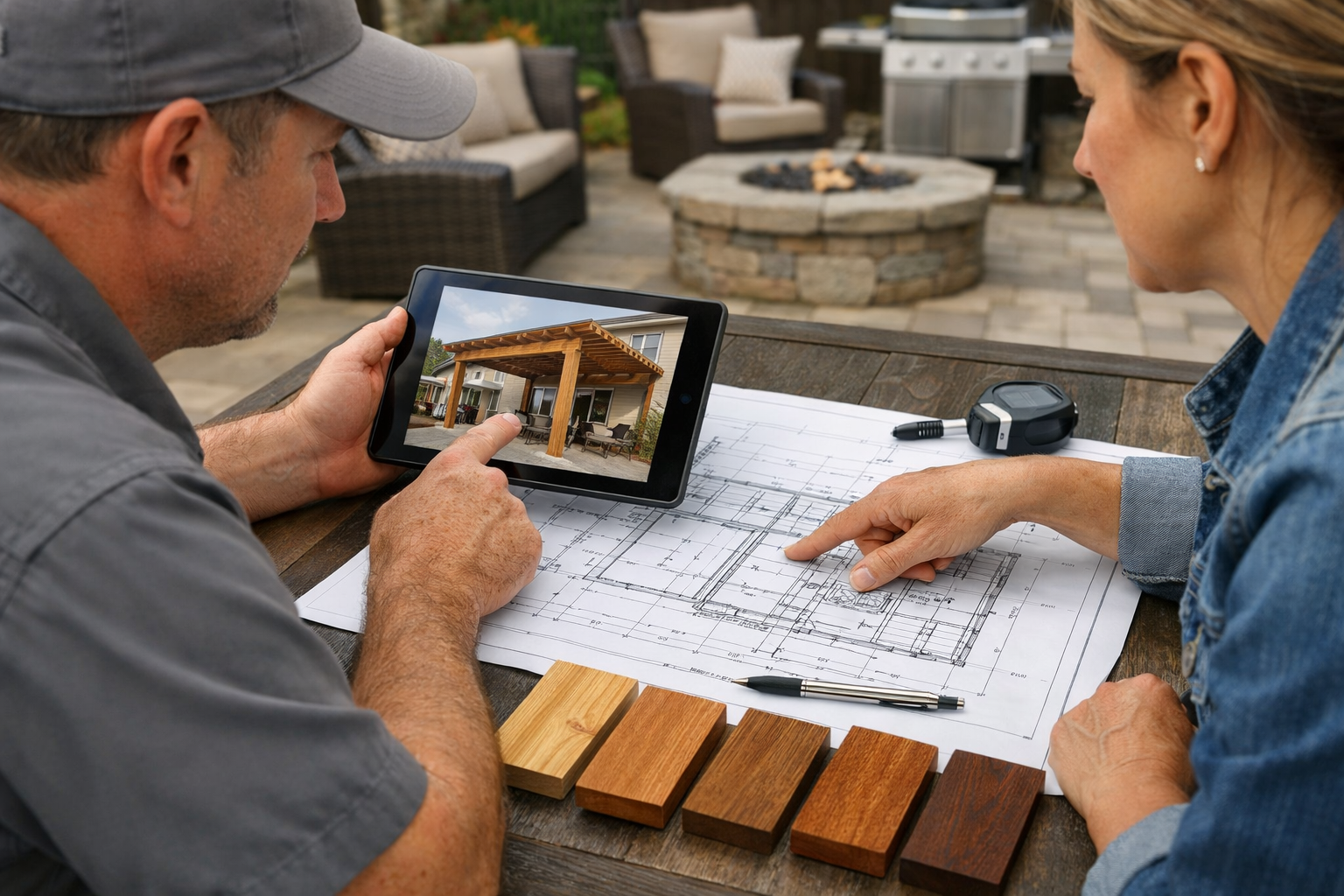
Step 1: Define how you’ll use the space
Be specific. “More shade” is a start, but it doesn’t tell you whether you need a pergola, a solid roof, or a larger footprint. Decide what your patio should support:
- Outdoor dining (table size, serving space, lighting needs)
- Lounge seating (conversation layout, fan placement)
- Cooking (grill zone, prep counter, ventilation considerations)
- Entertaining (traffic flow, music/TV, extra seating)
Step 2: Consider sun direction and prevailing winds
Sun and wind determine comfort more than most homeowners expect. If your patio faces intense afternoon sun, a pergola may still feel too bright unless slat direction and spacing are designed carefully (or supplemented with shade panels). If you host dinners outside, a solid roof can make the schedule less weather-dependent.
Step 3: Match the roofline and trim details to your home
The fastest way to make a patio cover look “custom” is to match key architectural cues: roof pitch, fascia thickness, trim proportions, and overall alignment. A cover that mirrors the home’s lines tends to boost curb appeal significantly—especially on homes where the patio is visible from the street or neighboring yards.
Step 4: Confirm drainage strategy early
Where will the water go? The answer should include gutters (if needed), downspout routing, and how runoff will move away from doors and foundations. This is also where you can coordinate with existing landscape drainage and hardscape slopes.
Step 5: Decide your maintenance comfort level
Every wood structure benefits from periodic maintenance. The key is choosing a finish plan that matches how hands-on you want to be. Ask about:
- Recommended re-seal or re-stain intervals for your chosen finish
- How much UV exposure your patio receives
- Whether you want a finish that can be spot-touched or requires full recoat
If you’re comparing contractors, it’s worth reading How To Choose a Patio Cover Contractor—it outlines what to ask, what to look for in estimates, and how to evaluate build quality.
Working with Corinth Patio Covers: From Estimate to Installation
When you’re investing in a custom cedar structure, the process matters almost as much as the design. A clear design-and-build workflow reduces surprises, protects your home during attachment and flashing work, and ensures the finished patio cover looks clean in the details.
A site visit that measures more than just dimensions
Expect a professional to evaluate attachment points, slab conditions, roofline compatibility, and how you want to use the patio day to day. The goal is to translate your priorities into a structure that’s comfortable, code-aware, and aesthetically consistent.
Guidance on style options and structural considerations
Good guidance means you’ll see tradeoffs clearly: pergola openness vs. solid-roof coverage, gable height vs. neighborhood sightlines, and how post placement affects views. If you’re in nearby areas, you might also find inspiration in regional examples like cedar patio covers in Denton TX or cedar patio covers in Argyle TX.
An estimate that spells out scope and options
A clear estimate should outline materials, major options (roof type, finish, electrical), and any permitting or inspection considerations. This transparency helps you compare bids intelligently—apples to apples—rather than guessing what’s included.
Installation focused on alignment, joinery, anchoring, and weatherproofing
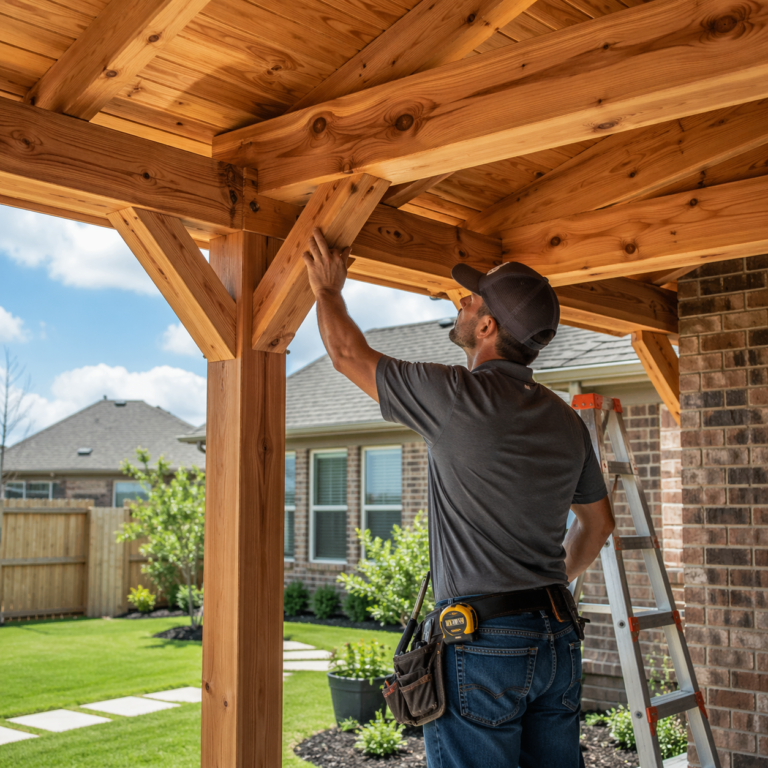
Quality shows up in the “quiet” parts: straight lines, consistent spacing, secure anchoring, and weatherproofing details that protect both the structure and the home. With cedar, clean joinery also elevates the finished look—especially when beams and rafters are intentionally exposed.
Communication and a final walkthrough
From timeline and access needs to a final walkthrough, communication keeps the project smooth. The end result should feel ready immediately—no loose ends, no “we’ll come back later,” and no confusion about care recommendations.
Conclusion: Bringing Your Cedar Patio Cover Design Together
The best custom cedar patio cover designs start with real-life use: how you relax, cook, entertain, and move through your backyard. From there, you choose a style that matches the level of protection you want (pergola vs. solid roof), then refine the structure with details that make it feel built-in—post placement, roofline alignment, lighting, fans, finishes, and smart drainage.
If you’d like help narrowing down options for your home in Corinth and nearby communities, the next step is a simple one: get measurements, talk through your priorities, and review a clear scope and estimate.
Get a Custom Cedar Patio Cover Estimate
Ready to upgrade your outdoor space with a cedar patio cover designed for your home? Contact Corinth Patio Covers for an estimate or call 972-318-9663.
Next step suggestion: jot down your ideal covered area size, must-have features (fans, lighting, TV), and whether you prefer a pergola feel or full solid-roof coverage.