









Texas Homeowners Guide
Cedar Patio Cover vs Aluminum: Pros, Cons & Cost Comparison (Texas Homeowners Guide)
Choosing between a cedar patio cover and an aluminum patio cover is less about “which is better” and more about what you want your backyard to feel like year after year—especially in North Texas, where sun intensity, spring storms, and humidity swings can punish the wrong material (or the right material installed the wrong way). Below is a practical, homeowner-friendly comparison of looks, cost, durability, maintenance, and long-term value—plus a simple framework you can use to decide with confidence.
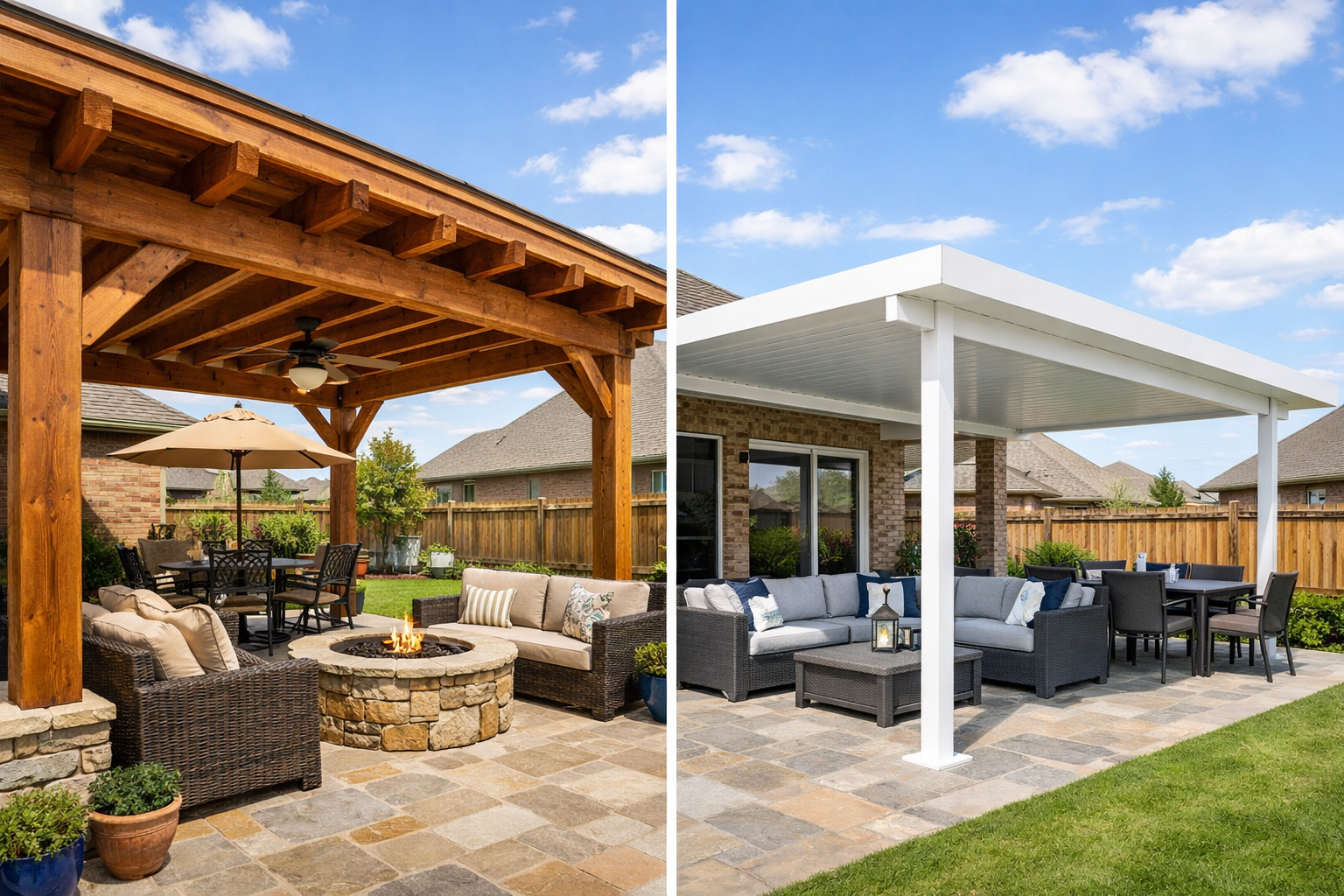
Quick orientation: Cedar wins on authentic warmth and custom character. Aluminum wins on consistency and low upkeep. Either can be a great investment when it’s engineered for your home’s loads, anchored correctly, and planned around how you actually use the space.
Key takeaway before we start
If you plan to stay in your home long-term, consider lifetime cost—not just installation cost. In many Texas backyards, the difference comes down to whether you’re comfortable with refinishing wood on a schedule.
- Love natural wood and don’t mind periodic staining/sealing? Cedar is usually the emotional “yes.”
- Want it to look sharp with minimal effort for years? Aluminum often makes the most sense.
At-a-Glance Comparison: Cedar vs Aluminum Patio Covers
Most patio cover decisions are made at the intersection of four things: appearance, maintenance, durability, and budget. Here’s a straightforward overview of how cedar and aluminum typically stack up for Texas homeowners.
| Category | Cedar patio cover | Aluminum patio cover |
|---|---|---|
| Look & feel | Natural wood grain; warm, premium; can be stained for a custom finish | Clean, consistent; modern; can blend with trim; often available in multiple colors |
| Maintenance | Periodic cleaning plus sealing/staining to protect from UV and moisture | Typically occasional washing; no staining or sealing cycles |
| Weather resistance | Naturally decay-resistant but still vulnerable to checking/fading without finishes | Resists rot/warping/insects; predictable performance over time |
| Long-term appearance | Can age beautifully if maintained; can gray and crack if neglected | Holds uniform look; powder-coated finishes can retain color well |
| Best for | Homeowners who want authentic wood character and customization | Homeowners who want a “set it and forget it” patio cover |
- Cedar patio covers offer a natural, premium wood aesthetic that pairs well with traditional and rustic exteriors, while aluminum delivers a clean, modern look that can mimic painted trim.
- Aluminum patio covers are typically chosen for low maintenance and consistent appearance over time, whereas cedar is chosen for character, warmth, and the ability to stain or customize.
- Cedar requires ongoing sealing or staining to protect against sun, moisture, and pests, while aluminum generally needs only occasional washing to remove dirt and pollen.
- In storm-prone areas, both materials can perform well when engineered correctly, but aluminum’s uniformity and resistance to rot often simplifies long-term durability.
- Your best choice depends on priorities: choose cedar for authentic wood beauty and customization, or choose aluminum for durability and minimal upkeep.
If you’re leaning toward wood, this deeper local overview can help set expectations: Cedar Patio Covers Corinth TX: What Homeowners Should Know. If you’re still early in planning and want to think in terms of value, ROI, and comfort benefits, bookmark What Are Patio Covers Worth? Cost vs Value, ROI, and Benefits for Homeowners.
Durability & Weather Performance (Sun, Rain, Wind, and Hail)
Texas weather isn’t just “hot.” It’s UV that fades finishes, temperature swings that stress materials, wind-driven rain that finds weak points, and hail that can test roof systems. The material matters—but in real-world performance, design + engineering + installation matter just as much.
Sun & heat: UV exposure is the silent long-term factor
Cedar holds up better than many woods because it’s naturally more decay-resistant, but UV exposure can still dry and “check” the surface over time (small cracks along the grain). That doesn’t necessarily mean structural failure—often it’s an aesthetic and maintenance issue first. A quality stain or sealer is your UV sunscreen, and in North Texas that protection is not optional if you want the wood to keep its color.
Aluminum doesn’t dry out, warp, or crack the way wood can. The key variable is the finish. A quality powder-coated aluminum system tends to keep its appearance more consistent, which is one reason aluminum is often chosen for “always looks finished” curb appeal.
Rain & humidity: moisture management is where wood needs attention
Moisture doesn’t just come from rain. It also comes from sprinklers hitting posts, shaded corners that stay damp, and condensation during humid seasons. Aluminum resists rot outright, which reduces the chance of hidden deterioration. Cedar can handle moisture better than many woods, but it still needs protective finishes to avoid long-term surface wear and to reduce the risk of localized damage where water lingers.
Wind loads: connection details matter more than material labels
In strong storms, the critical issue is often not “cedar vs aluminum” but how the cover is engineered and anchored. Posts, footings, ledger attachment (for attached covers), hardware selection, and span design determine whether a patio cover feels rock-solid or “bouncy.” A properly engineered cedar cover can be extremely sturdy; a properly engineered aluminum system can be equally stout. Conversely, either material can perform poorly if installed with shortcuts.
Hail: roof system choices can outweigh frame material
When homeowners worry about hail, they’re often picturing dents, leaks, or damaged panels. That’s why it’s important to talk about your roof style (solid roof vs. lattice vs. insulated panels vs. hybrid designs) and any drainage details. Impact performance can depend heavily on the specific roof system and how water is directed—more than whether the supporting structure is cedar or aluminum.
Texas durability checklist (bring this to your estimate)
- What wind-load approach is being used for my neighborhood and roofline exposure?
- How are posts anchored and protected at the base (where moisture tends to collect)?
- What finish system is included (type of stain/sealer for cedar or powder coat for aluminum)?
- How will water drain (slope, gutters, and downspouts) and where will it exit?
- What’s the plan for electrical runs (fans/lights) without compromising water protection?
Maintenance & Long-Term Upkeep
This is where many homeowners make their final decision. If two patio covers look great on day one, the one that still looks great on year five—without becoming a weekend project—is often the “better” cover for that homeowner.
Cedar maintenance: predictable if you plan for it
Cedar typically needs routine cleaning and periodic resealing or restaining. The schedule depends on sun exposure (full sun vs shade), the product used (semi-transparent stain vs solid stain/paint), and how much wind-driven rain hits the structure. In many Texas yards, homeowners plan for refinishing cycles rather than being surprised by them.
If cedar isn’t maintained, it can shift visually toward a gray patina. Some homeowners actually like that weathered look—but it can also come with more noticeable checking, and areas around fasteners or joints may show movement over time. If you want cedar to stay rich and “furniture-grade,” maintenance is part of the deal.
Aluminum maintenance: mostly rinse and go
Aluminum patio covers are generally selected because upkeep is minimal. Most owners can keep them looking good with occasional rinsing or gentle washing to remove pollen, dust, and grime. In shaded spots, you may also wash away light mildew buildup—more of a housekeeping task than a refinishing project.
Maintenance reality: Many homeowners don’t mind paying for cedar initially—they mind paying (or scheduling) for refinishing later. If you know your weekends are already full, aluminum’s low-maintenance profile can be a major quality-of-life upgrade.
If you already have a wood structure that’s showing age, you may find this helpful for understanding typical fixes and when replacement makes more sense: Cedar Patio Cover Repair and Replacement: Fix Rot, Leaks, and Weather Damage.
Appearance, Home Style Fit & Customization Options
For many North Texas homes, the patio cover is the biggest “visual” element of the backyard. It frames outdoor living, defines shade, and sets the tone for lighting, fans, seating, and even outdoor kitchens.
Cedar: character you can see and feel
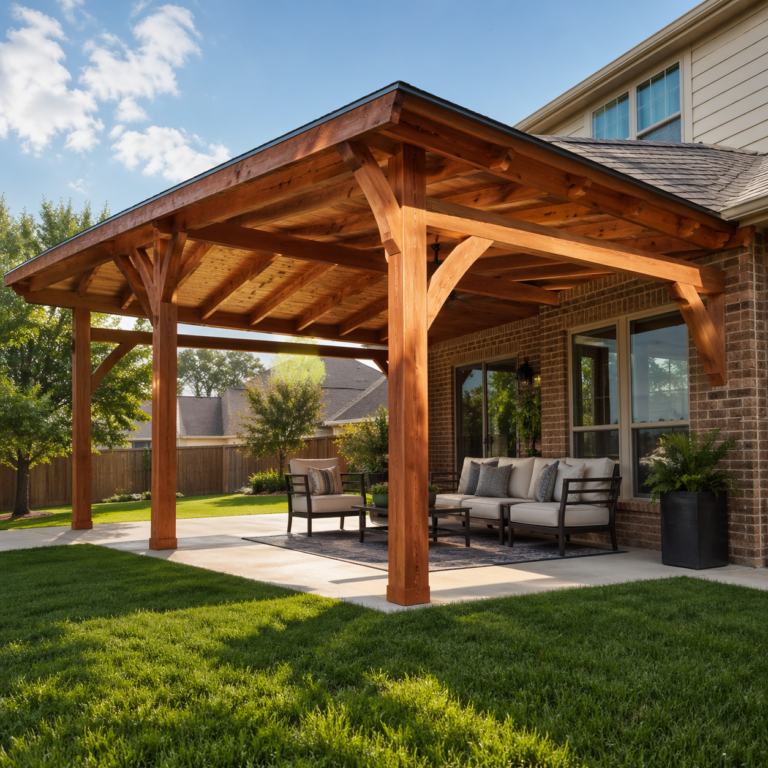
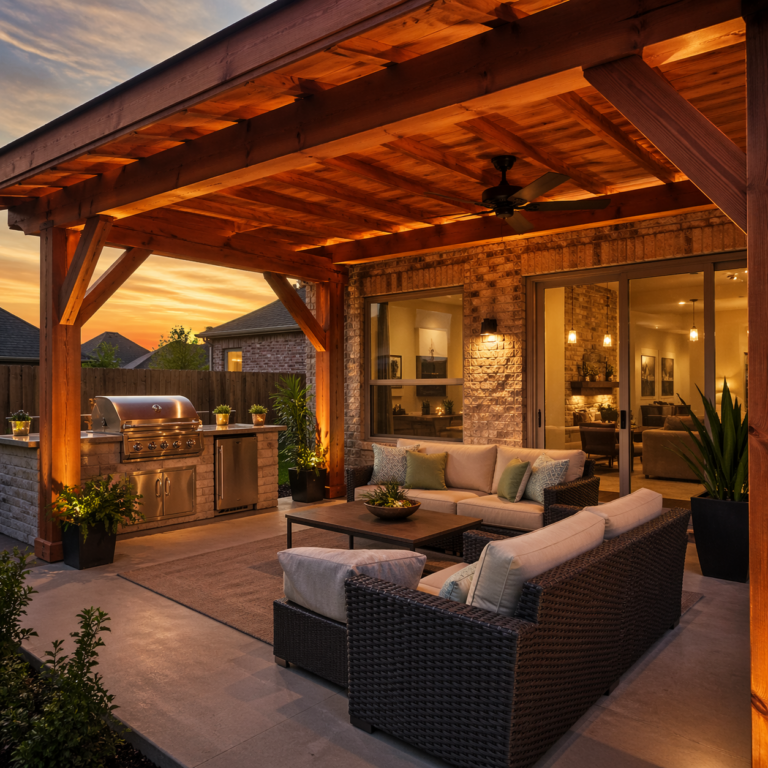
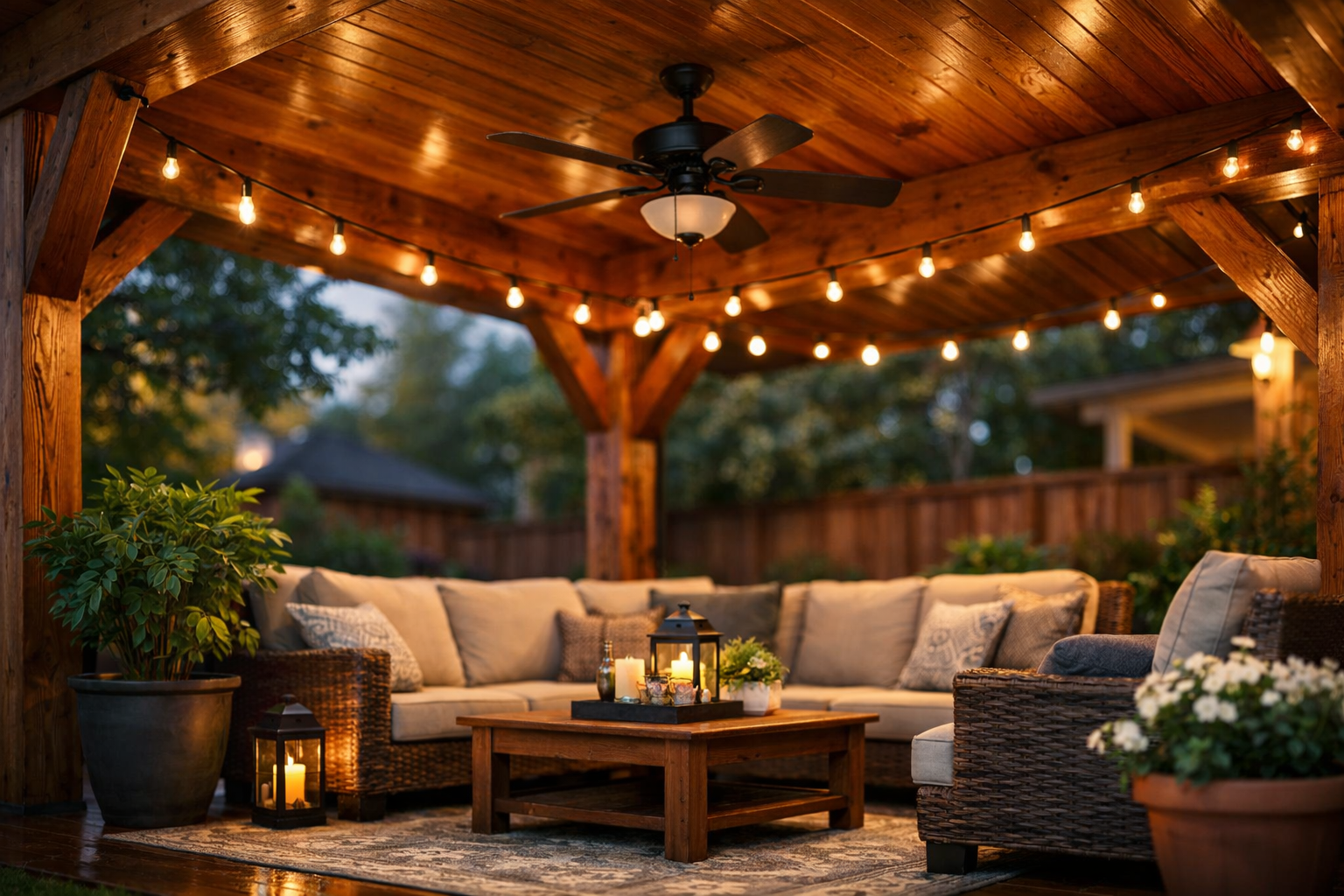
Cedar delivers something aluminum can only imitate: authentic wood grain, depth, and warmth. It pairs especially well with craftsman, farmhouse, traditional brick, and rustic-modern exteriors. When stained, cedar can look upscale and intentional—like a true outdoor “room.”
Customization is a strong point: cedar can be stained to highlight grain, tinted to warm up a cool exterior, or painted to match trim. The tradeoff is that the finish you choose needs to be appropriate for intense sun. In other words, the more you want it to look perfect, the more you need a plan to keep it that way.
Aluminum: crisp lines and a consistent finish
Aluminum patio covers tend to look clean and architectural. They work well when you want the structure to blend with the home—especially if you’re matching fascia and trim color. Many aluminum systems also integrate neatly with gutters and drainage, creating tidy rooflines and predictable water control.
If your goal is a patio cover that stays visually consistent through seasons—with minimal fuss—aluminum is usually the straightforward answer.
Design tip: decide whether the patio cover should “stand out” or “blend in”
A simple rule of thumb:
- Stand out: Cedar with a warm stain, decorative beam details, and layered lighting.
- Blend in: Aluminum that matches trim, with clean fascia lines and integrated drainage.
If you want inspiration for wood-forward layouts and style options, see Custom Cedar Patio Cover Designs: Styles, Costs, and Planning Tips for a Beautiful Backyard. If your covered patio is part of a bigger “backyard living” project, you may also like Outdoor Kitchens in Denton TX for Real Backyard Living.
Cost Considerations: Upfront Price vs Lifetime Value
There isn’t a single “cedar costs X and aluminum costs Y” number that’s honest without seeing the project. The variables—size, roof type, attachment method, footings, finish work, electrical, and drainage—change pricing quickly. But you can compare costs intelligently by making sure you’re comparing the same scope across bids.
How to compare bids the right way
When you receive estimates, verify what is actually included. Two quotes can look similar until you notice one includes footings, finish work, and permits (if applicable) and the other does not.
- Structure scope: posts, beams, headers, attachment method, hardware.
- Foundation scope: footings, post bases, any concrete work.
- Roof scope: solid roof vs lattice, panel type, slope, flashing.
- Water management: gutters, downspouts, and how runoff is directed.
- Finish scope: stain/paint system for cedar, or powder coat color selection for aluminum.
- Electrical scope: fans, recessed lights, switches, and routing.
Cedar: budget for maintenance as a real line item
Cedar’s long-term cost often isn’t about repairs—it’s about planned refinishing. If you hire out staining/sealing, those cycles can become a meaningful lifetime expense. If you DIY, the “cost” is time, tools, and the inevitable reality that Texas sun doesn’t wait for your schedule.
Aluminum: higher lifetime predictability
Aluminum’s value proposition is predictability. With minimal maintenance and no rot/insect issues, many homeowners see aluminum as a “pay once, enjoy longer” option. That can be especially attractive if you plan to hold the home for years or if you want the patio cover to remain consistently presentable for resale.
Value lens: If cedar and aluminum were cars, cedar is the classic you keep polished because you love it. Aluminum is the dependable daily driver that looks clean with basic washes.
To think about this decision in ROI terms (comfort, use of space, curb appeal, and resale), revisit What Are Patio Covers Worth? Cost vs Value, ROI, and Benefits for Homeowners.
How to Choose: A Simple Decision Framework
Use the framework below to get from “I’m not sure” to a confident next step. It’s designed for real-life Texas conditions—sun, storms, and the way most families actually use the backyard.
Step 1: Decide what matters most (rank these four)
- Low maintenance (you want it to look good with minimal effort)
- Authentic natural look (wood character and warmth)
- Long-term durability (predictable performance across seasons)
- Budget control (upfront + long-term)
If low maintenance ranks #1, aluminum is typically the safer bet. If authentic natural look ranks #1, cedar is usually the right fit—provided you accept periodic refinishing.
Step 2: Evaluate your backyard conditions honestly
Backyard microclimates matter more than most homeowners realize. The same cedar cover can age very differently depending on exposure and water habits.
- Heavy shade: can increase mildew risk and keep surfaces damp longer.
- Sprinklers hitting posts: concentrates moisture where wood is most vulnerable.
- Full afternoon sun: accelerates fading and finish breakdown on cedar.
- Wind-driven rain exposure: increases water intrusion risk if detailing is weak.
Step 3: Match the material to your lifestyle
Ask yourself what you want weekends to look like.
- If you’d rather spend weekends using the patio, aluminum often aligns best.
- If you enjoy the look and feel of wood and don’t mind planned upkeep, cedar can be incredibly rewarding.
Step 4: Get an on-site estimate (and compare apples to apples)
Even if you’re confident about the material, an on-site assessment will clarify span requirements, attachment details, drainage, and any electrical needs. It also helps you choose roof style and layout to maximize shade during the hours you actually use the patio.
Decision shortcut
- Pick cedar if you want a signature backyard feature with natural character—and you’re okay with scheduled staining/sealing.
- Pick aluminum if you want clean, consistent curb appeal with minimal upkeep—and you prefer predictable long-term performance.
Common Questions Texas Homeowners Ask
Will cedar patio covers hold up in North Texas?
Yes—especially when properly engineered and maintained. Cedar is naturally more resistant to decay than many woods, but it still needs a protective finish plan to handle UV exposure, moisture, and seasonal movement.
Is aluminum always better for storms?
Not automatically. Aluminum resists rot and insects, but storm performance depends heavily on engineering, anchoring, spans, roof design, and water management details. A well-built cedar cover can be very robust.
What if I love the look of wood but hate maintenance?
That’s the tradeoff. If you want real wood grain and warmth, cedar is hard to beat. If you want minimal upkeep and a consistent painted look, aluminum tends to fit better. An on-site consultation can also explore design approaches that reduce maintenance exposure (better drainage, post base protection, and finish selection).
How do I pick the right contractor (regardless of material)?
Look for clear scope, structural approach, and transparency around footings, attachment, and finishes. This guide can help you vet bids and ask the right questions: How To Choose a Patio Cover Contractor.
Conclusion: The Best Patio Cover Material Is the One You’ll Enjoy Long-Term
Cedar and aluminum can both be excellent patio cover materials for Texas homes—but they succeed for different reasons. Cedar is the choice for homeowners who want authentic wood beauty, a premium feel, and customization flexibility. Aluminum is the choice for homeowners who want a clean, consistent look with minimal maintenance and predictable durability.
Before you decide, compare bids with the same scope, think about your yard’s sun and moisture patterns, and be honest about your maintenance tolerance. If you’d like help weighing options for your exact home layout, roof style, and budget, an on-site estimate is the fastest way to get clarity.
Get a Patio Cover Estimate from Corinth Patio Covers
Want help deciding between cedar and aluminum? Request a quote and get a recommendation based on your home, budget, and maintenance preferences. Call 972-318-9663 or use the estimate form.